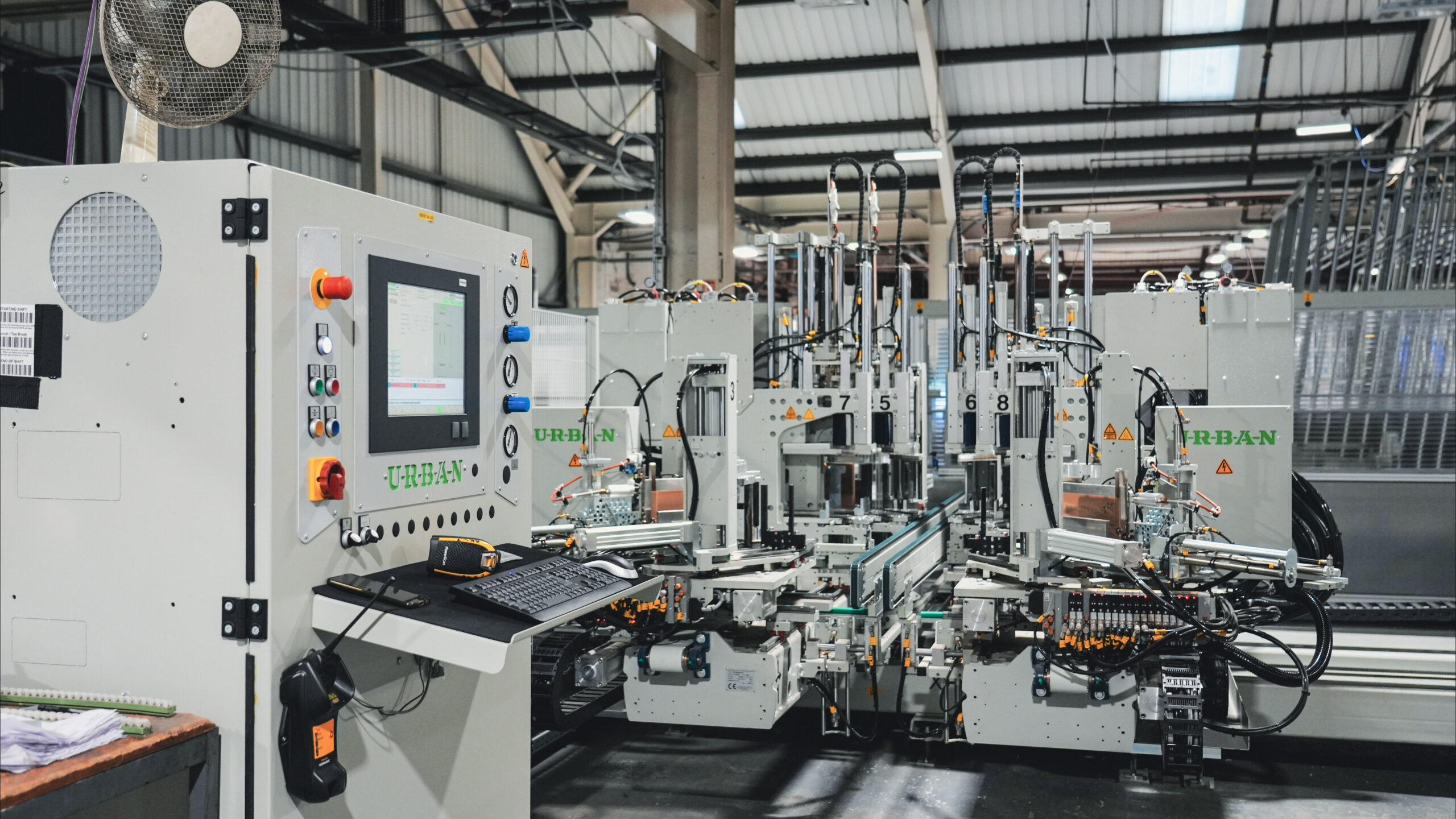
Integrating a new production line into an existing window manufacturing facility requires far more than simply selecting the right machines. The factory layout, existing infrastructure, material flow, dismantling and installation must be considered as one integrated concept from the outset.
At Starglaze in the United Kingdom, the particular challenge was to install a high-performance URBAN welding and corner-cleaning line in exactly the same area previously occupied by the existing equipment. At the same time, two structural columns had to be fully integrated into the new line layout.
Through detailed planning and close cooperation between Starglaze, our UK sales partner TMS and URBAN, a customised solution was developed that was precisely tailored to the customer’s spatial and production-related requirements.
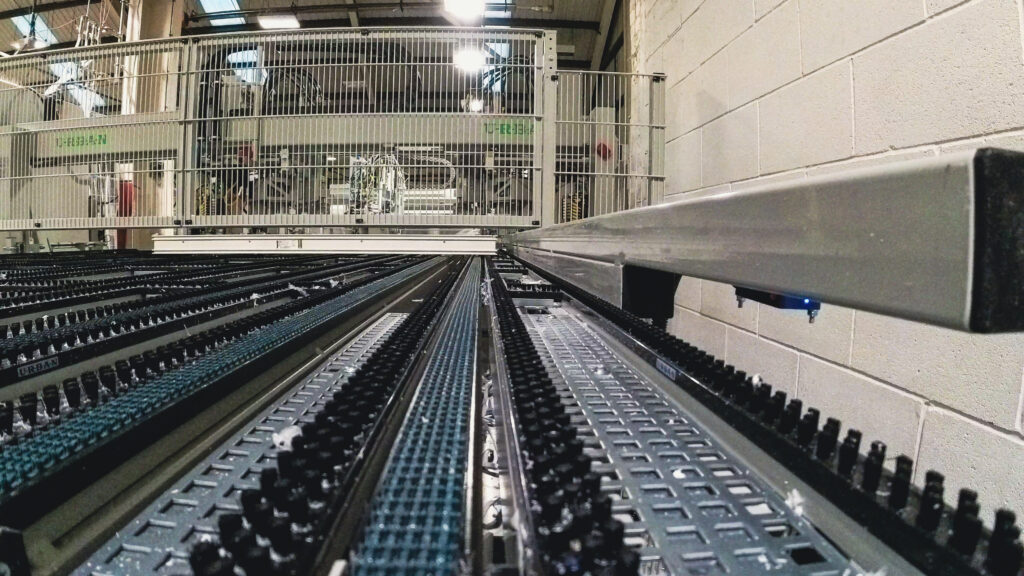
Intelligently Incorporating Existing Factory Structures
Not every production facility provides ideal conditions for automated window manufacturing. Existing building structures, limited floor space and installed utilities can have a significant impact on the planning of a new production line.
Two structural columns were located within the area designated for the new line at Starglaze, and their positions could not be altered. They therefore had to be incorporated into the layout planning as fixed parameters from the very beginning.
The complete welding and corner-cleaning line was designed so that the columns could be integrated into the overall layout without significantly restricting the material flow or access to the individual machines.
The following aspects had to be taken into consideration:
- Optimum positioning of the machines and transport units
- Continuous and efficient material flow
- Accessibility for operation, maintenance and servicing
- Compliance with the required safety zones
- Best possible use of the available production space
The structural conditions were therefore not treated as an obstacle, but as clearly defined parameters for the development of a customised production solution.
Precisely Coordinating Dismantling and Installation
Another particular aspect of the project was that the new line had to be installed in the same area in which the existing production equipment was still operating.
The dismantling of the old machines and the installation of the new URBAN line could therefore not be carried out independently of one another. Both project phases had to be precisely coordinated in terms of timing and organisation.
Before work began, the following points were defined:
- Which existing machines had to be dismantled first
- Which areas would subsequently become available for installation
- When the individual line components could be brought into the production facility
- The sequence in which the machines, buffer system, conveyor technology and safety equipment would be installed
- How the production interruption could be kept as predictable and manageable as possible
This approach required close coordination between everyone involved in the project. Only through forward-looking planning could the individual work stages be efficiently coordinated and unnecessary delays avoided.
Two AKS 6610/8 Machines as a High-Performance Foundation
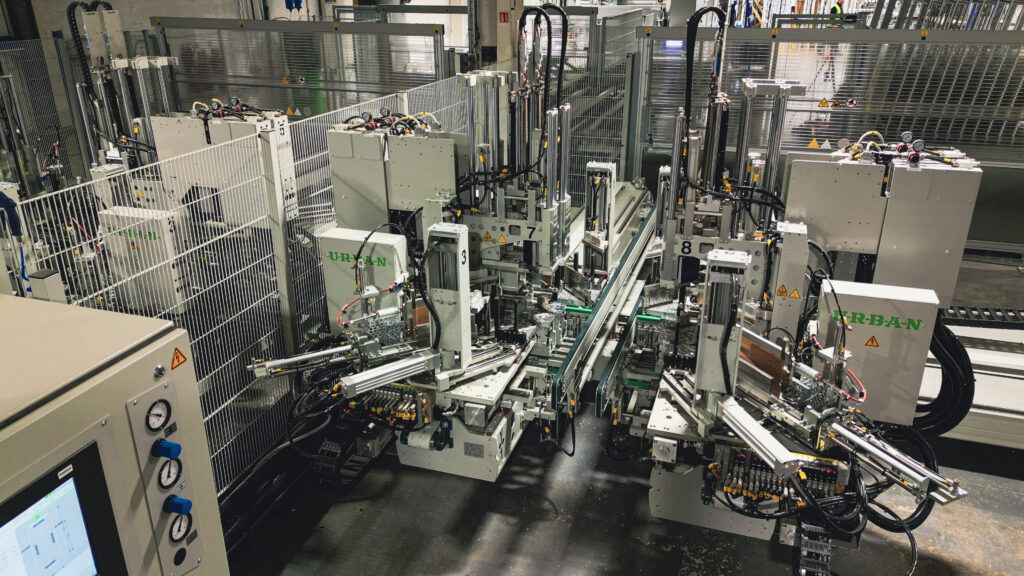
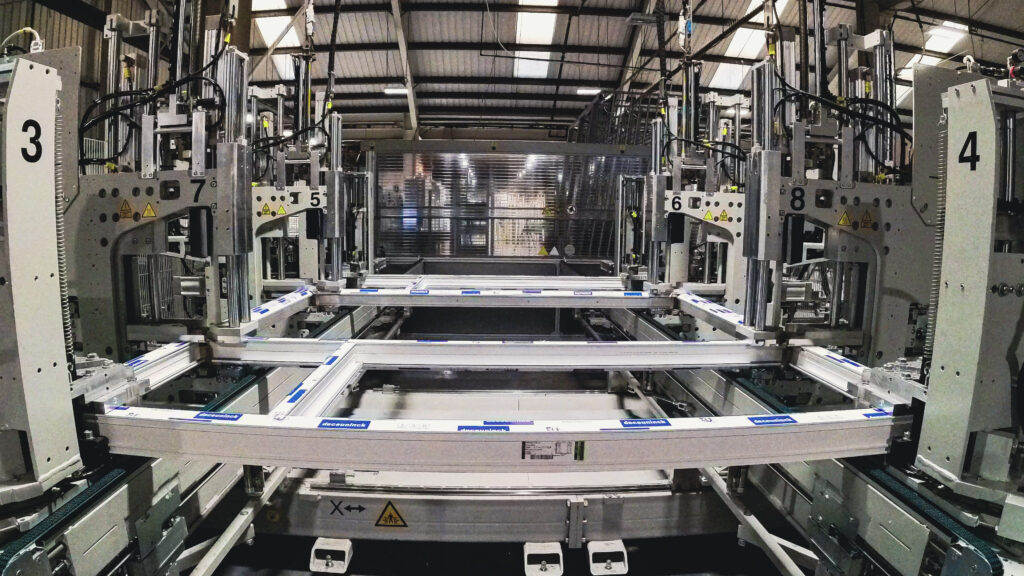
The welding concept of the new production line includes two URBAN AKS 6610/8 eight-head welding machines.
The two machines form the high-performance foundation of the line and enable the efficient industrial production of uPVC window frames and sashes. Operating both welding machines in parallel provides high production capacity while maintaining the flexibility needed to respond to different manufacturing requirements.
Both AKS 6610/8 machines were additionally equipped with the HFL timber-look corner finish. This technology enables the production of visually sophisticated corner joints and expands the manufacturing possibilities for high-quality window elements.
The combination of high performance, process reliability and flexibility was a key element of the overall line concept.
Buffer System for a Stable Production Flow
After the welding process, the frames and sashes are transferred to a downstream buffer system.
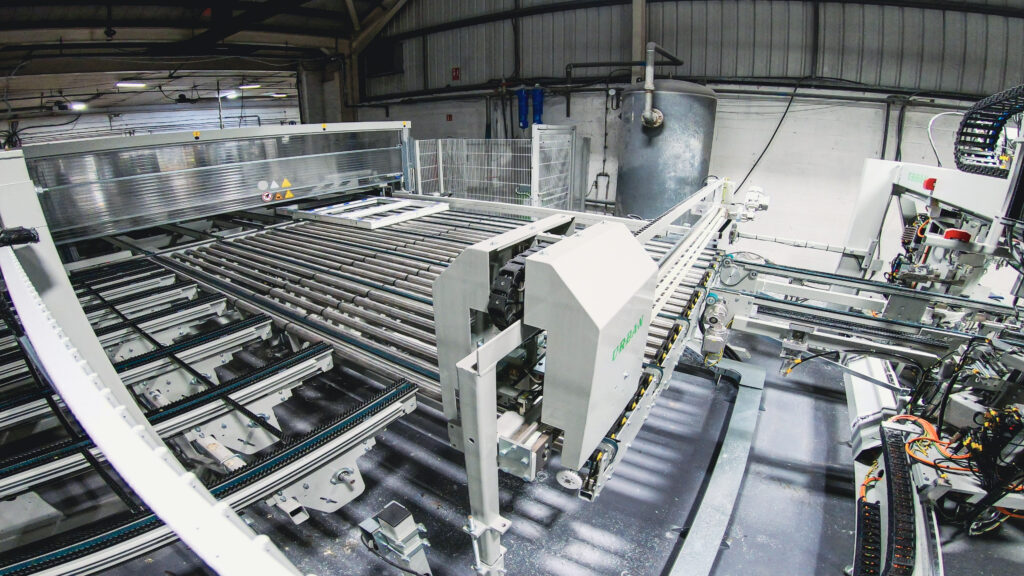
This buffer system performs several important functions within the automated window production process. On the one hand, coloured elements can be temporarily stored in a controlled manner. On the other hand, the system provides a balancing function between the welding process and the subsequent machining stage.
Should a temporary backlog occur at a downstream machine, the welded elements can initially be held in the buffer. This prevents the entire production line from having to stop immediately.
The buffer system therefore supports:
- Continuous material flow
- The decoupling of different processing times
- The temporary storage of coloured elements
- The balancing of short-term production peaks
- Greater stability throughout the entire manufacturing process
Particularly in high-performance automated production lines, intelligent buffer solutions of this kind are essential for increasing line availability and operational flexibility.
The SV 800 as the Workhorse of the Line
Following temporary storage in the buffer, the welded elements are transferred to the URBAN SV 800.
With its two machining units – Machine 1 and Machine 2 – the corner-cleaning machine serves as the central workhorse of the production line. It performs the reliable and precise machining of the welded window frames and sashes.
The SV 800 is designed for high throughput and reliable operation in an industrial production environment. Its integration into the automated material flow enables the efficient onward processing of the previously welded elements.
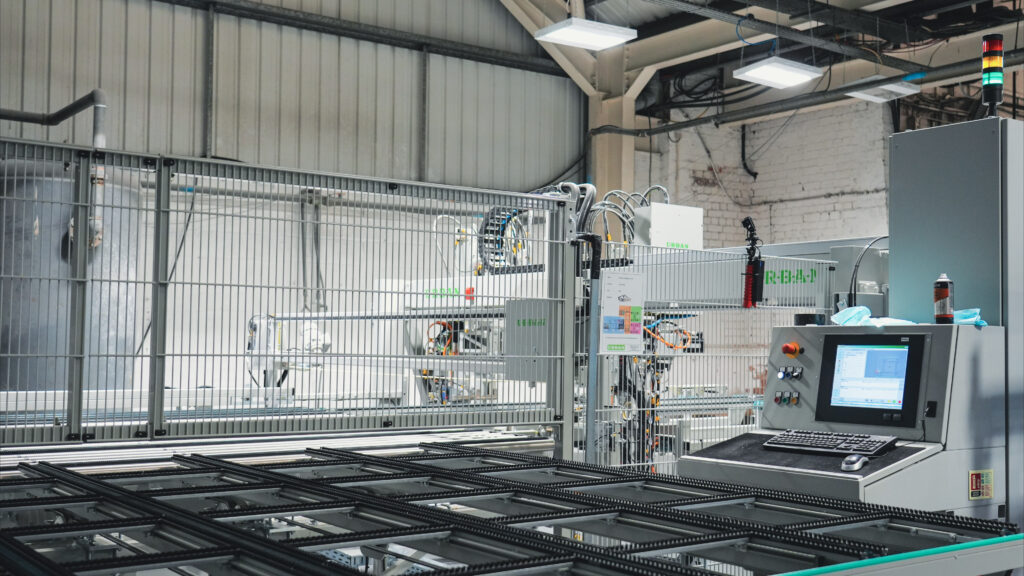
A manual loading station was also installed upstream of the SV 800. This allows elements to be manually introduced into the process when required, independently of the automated material flow.
This provides additional flexibility, for example for:
- Special and individual elements
- Manual loading operations
- Specific production situations
- Elements that are not processed through the standard automated sequence
The line concept therefore combines a high level of automation with the manual intervention options required for day-to-day production.
Customised Line Planning Instead of a Standard Solution
The project clearly demonstrates that a modern production line is not created simply by combining high-performance machines.
What matters is the interaction between all technical, spatial and organisational factors:
- Existing factory geometry
- Structural obstacles and factory columns
- Available production space
- Material flow between the machines
- Dismantling of the existing production equipment
- Sequence of the installation work
- Buffer and automation concept
- Ease of operation and service accessibility
- The customer’s future production requirements
The positions of the two structural columns influenced more than just the arrangement of the machines. They also had to be considered when planning the conveyor routes, safety zones and access areas.
A solution of this kind cannot simply be taken from a standard layout. It is developed through technical expertise, detailed project planning and continuous communication with the customer.
Successful Cooperation with Starglaze and TMS
A key success factor was the close and collaborative partnership between Starglaze, TMS and URBAN.
From the initial layout planning and the coordination of dismantling through to installation and commissioning, each stage of the project was jointly coordinated.
This enabled technical questions to be clarified at an early stage and any necessary adjustments to be incorporated directly into the line concept. At the same time, it ensured that both the spatial conditions and the customer’s operational requirements were fully taken into account.
Following the completion of installation and commissioning, the new production line was successfully handed over to Starglaze together with our sales partner TMS, to the customer’s full satisfaction.
A subsequent visit to the site also provided an opportunity to view the line again under real production conditions. It demonstrated how the individually planned solution fits into the existing facility and how the machines, buffer system and transport units have been connected to form a continuous manufacturing process.
Complex Requirements Demand Well-Engineered Solutions
The project demonstrates that even demanding spatial and organisational conditions can be successfully addressed when the layout, machine concept, material flow and project sequence are planned together from the outset.
Two structural columns within the line area, the necessary dismantling of the existing machinery and the carefully timed installation of the new line made this project a particularly demanding planning challenge.
With two AKS 6610/8 machines, a downstream buffer system, the SV 800 and a manual loading station, a high-performance, flexible and individually tailored welding and corner-cleaning line was created for modern uPVC window production.
The project is a clear example of the URBAN approach to solutions: we do not simply supply individual machines. Together with our customers and sales partners, we develop production concepts based on the actual spatial, technical and organisational requirements of each project.
Watch the SHORTCUT Video
Would you like to see the production concept in action? Our SHORTCUT video provides a compact insight into the interaction between the eight-head welding machine, conveyor technology, buffer system and SV 800.
Are You Planning a New Production Line?
Whether you are dealing with limited production space, existing structural columns, installed machinery or complex material flows, URBAN will work with you to develop an individual line concept for your window production.
Let us work together to plan the right solution for your production.